Introduction
Military vehicles, armored personnel carriers, and battlefield fortifications depend on welds that can withstand extreme ballistic and blast loads. Unlike commercial fabrication, where cosmetic defects may be tolerated, welding quality control military standards demand zero-tolerance inspection regimes and documented traceability for every weld pass. When a weld failure can cost lives, quality control is not optional — it is the foundation of military-grade armor manufacturing.
This article examines the welding quality control military ecosystem: the governing standards, the nondestructive testing (NDT) methods that validate weld integrity, the personnel qualifications required, and the documentation trail that ensures accountability. Whether you are a defense contractor, a military procurement officer, or a welding engineer evaluating an AWS D1.1 welding shop China-based supplier, understanding these requirements is essential for mission-critical armor production.
We will cover everything from ultrasonic testing (UT) and magnetic particle testing (MT) for armor welds to the specific quality control frameworks that differentiate military fabrication from commercial welding. By the end, you will have a comprehensive understanding of what it takes to achieve MIL-SPEC weld quality.
Welding Quality Control Military: Definition and Core Principles
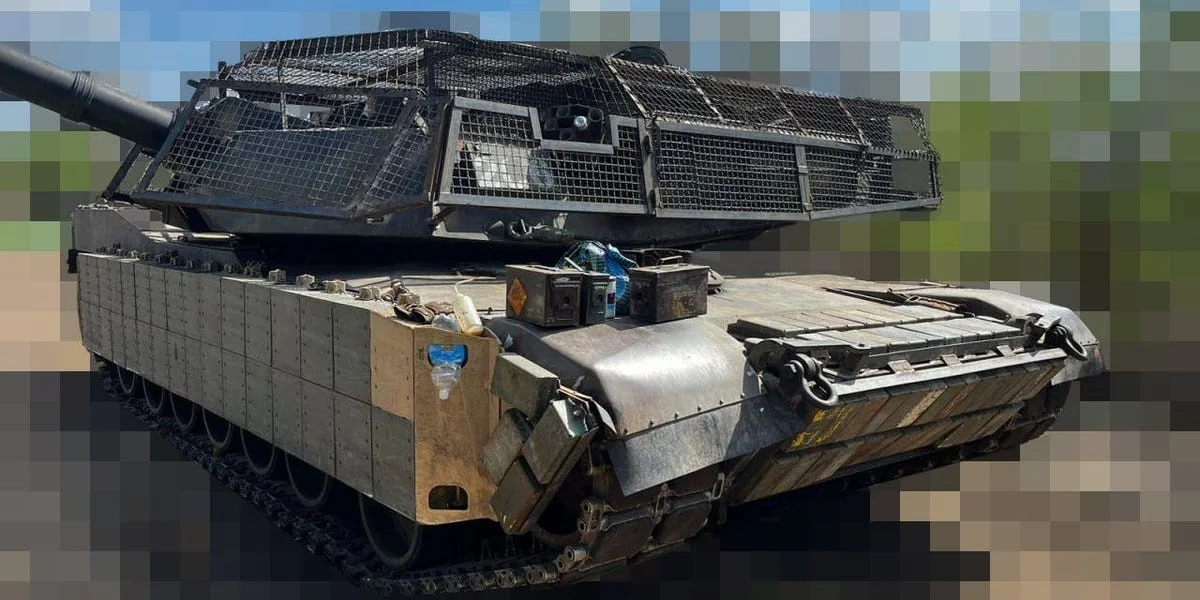
Military welding quality control refers to the systematic process of ensuring that all welded joints in military equipment — from armored hulls to weapons systems — meet stringent defense specifications. Unlike commercial welding, where the primary concern may be structural integrity under normal loads, welding quality control military standards account for battlefield conditions: ballistic impact, blast overpressure, extreme temperatures, and long-term fatigue in hostile environments.
The Core Principles of Military Weld QC
Military welding quality control rests on four pillars:
- Procedure Qualification: Every welding procedure used in military fabrication must be qualified through destructive and nondestructive testing before production begins. This is typically governed by standards such as MIL-STD-1685 (for aluminum armor) or MIL-STD-22 (for general welding design).
- Weld Procedure Specification (WPS): Each joint design requires a detailed WPS that defines parameters such as preheat temperature, interpass temperature, filler metal type, shielding gas, amperage, voltage, travel speed, and post-weld heat treatment.
- Weld Performance Qualification (WPQ): Every welder working on military projects must demonstrate their ability to produce sound welds using the qualified procedures. Certification records must be maintained and auditable.
- Inspection and Testing: Military weld quality is verified through a combination of visual inspection and NDT methods, with specific acceptance criteria defined by the applicable military standard.
The level of scrutiny applied in military welding capabilities far exceeds commercial standards. For example, while ASME Section IX allows certain porosity in structural welds, military standards for armor plate welding typically require zero porosity, zero surface cracks, and limited undercut to less than 0.5 mm. Every weld may require 100% NDT coverage depending on the criticality classification of the joint.
How Welding Quality Is Controlled in Military Armor Fabrication
In military armor production, quality control begins before the first arc is struck. The process follows a structured sequence: incoming material inspection of armor plate (verifying chemistry, hardness, and ballistic certification), pre-weld fit-up inspection, in-process weld parameter monitoring, post-weld visual inspection, NDT examination, and final acceptance testing. Each stage is documented and signed off by qualified inspectors. This systematic approach ensures that armor plate inspection NDT catches defects at the earliest possible stage, preventing costly rework or catastrophic field failures.
Key Military Welding Standards and Specifications
Military welding quality control is governed by a hierarchy of standards that range from broad defense specifications to application-specific procedures. Understanding this framework is essential for any supplier or contractor involved in defense fabrication.
MIL-STD-22: General Welding Design Standard
MIL-STD-22 is the primary U.S. military standard governing welded joint design for defense applications. It covers weld joint geometry, weld size requirements, preheat and interpass temperature control, and acceptance criteria for various weld types. This standard applies across all military branches and serves as the baseline for most defense welding contracts.
MIL-STD-1685: Welding of Aluminum Armor
MIL-STD-1685 specifically addresses the welding of aluminum armor alloys used in lightweight armored vehicles. It defines qualification requirements for welding procedures and welders, inspection criteria, and repair procedures. Aluminum armor welding presents unique challenges due to high thermal conductivity and susceptibility to porosity, making strict welding quality control military procedures especially critical.
AWS D1.1 and Military Applications
The American Welding Society (AWS) D1.1 Structural Welding Code — Steel is widely referenced in military contracts for steel armor and structural components. Many defense contractors rely on an AWS D1.1 welding shop China-based facility to produce military-grade components, as AWS D1.1 provides internationally recognized quality benchmarks. When AWS D1.1 is invoked in a military contract, the acceptance criteria are often supplemented with additional defense-specific requirements, creating a hybrid standard that combines commercial best practices with military rigor.
Armor-Specific Welding Standards
Beyond the general standards, specific armor welding standards exist for different material types:
- MIL-STD-1941: Welding of steel armor — covers high-hardness and rolled homogeneous armor (RHA) steel welding.
- MIL-STD-2033: Welding of titanium armor — addresses the unique welding requirements for titanium alloys used in lightweight armor systems.
- STANAG 4569: NATO standard for protection levels of armored vehicles — referenced for weld performance requirements related to ballistic protection.
- ISO 3834: International quality requirements for welding — often used as the quality management framework for defense suppliers outside the U.S.
These standards collectively define what constitutes acceptable weld quality, the inspection methods required, and the documentation that must accompany every weld. For suppliers building military welding capabilities, compliance with these standards is a prerequisite for contract eligibility.
NDT Methods for Military Welding Quality Control
Nondestructive testing (NDT) is the backbone of welding quality control military inspection regimes. Military specifications typically require multiple NDT methods to be applied to each critical weld, as no single technique can detect all defect types. The combination of methods ensures comprehensive coverage of surface, subsurface, and volumetric flaws.
Ultrasonic Testing (UT) for Armor Welds
Ultrasonic testing uses high-frequency sound waves to detect internal discontinuities in welds. For military armor welding, UT is the preferred method for detecting lack of fusion, incomplete penetration, slag inclusions, and cracks in thick-section welds. UT MT welding inspection armor protocols typically require shear-wave UT from multiple angles to ensure full volumetric coverage. Modern phased-array UT (PAUT) systems provide real-time imaging of weld cross-sections, enabling inspectors to characterize defect size, orientation, and location with high precision. Acceptance criteria for UT in military work are typically more stringent than AWS D1.1 — for example, any indication with an amplitude above 20% of the reference level may be rejectable, compared to 50% in commercial work.
Magnetic Particle Testing (MT) for Military Fabrication
Magnetic particle testing is used to detect surface and near-surface discontinuities in ferromagnetic materials such as steel armor. The process involves magnetizing the weld area and applying ferromagnetic particles that accumulate at leakage fields caused by cracks, lack of fusion, or porosity. In welding quality control military applications, MT is routinely performed on all final weld surfaces and on each weld pass layer during multipass welding. Wet fluorescent MT is preferred for military work because it offers higher sensitivity for detecting tight fatigue cracks that could propagate under ballistic loading. For non-ferromagnetic armor materials such as aluminum or titanium, dye penetrant testing (PT) is substituted for MT.
Radiographic Testing (RT) and Advanced NDT Methods
Radiographic testing using X-ray or gamma-ray sources provides a permanent film or digital record of weld interior quality. RT is particularly valuable for detecting volumetric defects such as porosity, slag inclusions, and burn-through in armor welds. Digital radiography (DR) and computed tomography (CT) are increasingly adopted in military NDT programs because they enable faster inspection and better defect characterization.
Additional NDT methods commonly specified in military weld inspection include:
- Visual Testing (VT): The first line of inspection, performed before, during, and after welding. Military VT acceptance criteria prohibit surface cracks, incomplete fusion, crater cracks, and excessive reinforcement.
- Eddy Current Testing (ET): Used for detecting surface cracks and measuring coating thickness on armor plate.
- Acoustic Emission Testing (AE): Monitors weld integrity during proof-loading of armored structures.
The specific combination of NDT methods applied to a weld depends on the joint criticality classification, material type, and thickness. Armor plate inspection NDT plans are typically defined in the Contract Data Requirements List (CDRL) and must be approved by the government quality assurance representative before production begins.
Armor Plate Inspection and NDT Procedures
Armor plate inspection NDT follows a structured sequence that mirrors the welding process itself. Unlike standard structural steel inspection, armor plate welding requires additional scrutiny because the base material is specifically engineered for ballistic resistance, and any welding defect creates a vulnerability point where armor integrity is compromised.
Pre-Weld Armor Plate Inspection
Before welding begins, incoming armor plate must be verified against the material certification. This includes confirming the plate grade (such as MIL-A-12560 for homogeneous armor or MIL-A-46077 for high-hardness armor), checking for lamination defects using UT, and verifying dimensional compliance. Surface preparation is critical — armor plate must be free of mill scale, oil, moisture, and any contaminants that could introduce hydrogen into the weld pool and cause hydrogen-induced cracking.
In-Process Weld Inspection
During multipass welding of armor plate, inspection occurs at multiple stages. Each weld pass may be visually inspected and subjected to MT or PT before the next pass is deposited. This layer-by-layer approach ensures that any defect is caught immediately, rather than being buried under subsequent weld metal. Interpass temperature is monitored and recorded, as exceeding the maximum interpass temperature can degrade the heat-affected zone (HAZ) properties in armor steel.
Post-Weld Armor Plate NDT
After welding is complete, the full inspection regime is applied. This typically includes:
- 100% visual inspection of all weld surfaces
- 100% MT or PT of all welds in armor plate
- 100% UT of all butt and full-penetration groove welds
- RT of selected critical joints as specified in the contract
- Hardness testing of the HAZ to verify that softening does not exceed specification limits
The acceptance criteria for armor plate inspection NDT are defined in the applicable military standard. Typical rejectable defects include any linear indication (crack, lack of fusion, incomplete penetration) regardless of length, rounded indications exceeding 1.6 mm (1/16 inch) in diameter, and clusters of porosity exceeding specified limits. These criteria are significantly tighter than commercial structural welding standards.
Ballistic Test Verification
For prototype or first-article armor welds, ballistic testing is often required to validate the welding procedure. Test coupons are welded using the qualified WPS, then subjected to ballistic impact at specified velocities and angles. The weld and HAZ must not fail catastrophically — cracking that reduces ballistic performance below specification levels constitutes a weld procedure failure. This destructive validation provides the ultimate proof that UT MT welding inspection armor protocols are correctly specified and that the welding procedure produces sound, battle-ready joints.
Personnel Qualifications for Military Welding Quality Control
Who performs welding quality control for military projects? This is one of the most frequently asked questions in defense contracting. The answer involves multiple levels of qualified personnel, each with distinct roles and certification requirements.
Certified Welding Inspectors (CWI)
The primary inspection authority in welding quality control military programs is the Certified Welding Inspector, typically certified to AWS QC1 standards. Military contracts often require Senior Certified Welding Inspectors (SCWI) for oversight roles, as they have more extensive experience and can interpret complex specification requirements. The CWI is responsible for verifying that welding procedures are followed, that welder certifications are current, and that completed welds meet acceptance criteria.
NDT Level II and Level III Technicians
Each NDT method used in military weld inspection requires certified personnel. NDT certifications follow the SNT-TC-1A or NAS-410 standards, with three levels of qualification:
- NDT Level I: Technicians who perform specific NDT operations under supervision. They can set up equipment, conduct tests, and record results but cannot interpret accept/reject criteria independently.
- NDT Level II: Technicians who can set up, conduct, interpret, evaluate, and report NDT results. Level II personnel are the primary workforce for UT MT welding inspection armor programs. They must be certified in each specific method (UT, MT, RT, PT, etc.) they practice.
- NDT Level III: Senior specialists who develop NDT procedures, approve techniques, and certify Level I and Level II personnel. Every military welding program typically has a designated Level III who serves as the NDT technical authority.
Welders and Welding Operators
Welders on military projects must be qualified in accordance with the governing military standard or AWS D1.1 (as specified in the contract). Welder qualification involves producing test coupons that are subjected to destructive and nondestructive testing. Certification is typically valid for a limited period (often 6 months to 1 year) and must be renewed if the welder has not used the qualified process within that period. An AWS D1.1 welding shop China that supplies military components must maintain current welder certifications for all personnel working on defense contracts, with records available for audit by the contracting military authority.
Government Quality Assurance Representatives (QAR)
For U.S. Department of Defense contracts, Government QARs (also called Defense Contract Management Agency — DCMA — representatives) perform independent oversight of contractor quality systems. They review NDT records, witness critical inspection operations, and have the authority to reject nonconforming work. Their role is to ensure that the contractor's military welding capabilities are being applied correctly and that all contractual quality requirements are met.
Documentation Requirements for Military Welding Projects
Documentation is the backbone of welding quality control military programs. In defense contracting, if it was not documented, it was not done. The documentation requirements for military welding projects are extensive and serve multiple purposes: providing traceability, enabling auditability, supporting acceptance decisions, and creating a permanent record for lifecycle management.
Essential Documentation Types
The following documentation is typically required for military welding projects:
| Document Type | Description | Retention Period |
|---|---|---|
| Weld Procedure Specification (WPS) | Detailed welding parameters for each joint configuration, qualified by testing | Life of the system + 5 years |
| Procedure Qualification Record (PQR) | Test results proving the WPS produces sound welds | Life of the system + 5 years |
| Welder Performance Qualification (WPQ) | Records showing each welder's certified processes and expiration dates | Duration of employment + 3 years |
| Weld Map | Drawing identifying every weld in the structure with unique ID numbers | Life of the system |
| NDT Reports | Detailed results of each NDT examination, including technique, findings, and accept/reject decisions | Life of the system + 5 years |
| Traveler / Weld Log | Daily record of weld production including operator, parameters, and inspection results | Life of the system |
| Nonconformance Report (NCR) | Documentation of any weld defects found, repair procedures, and re-inspection results | Life of the system + 5 years |
| Material Test Reports (MTR) | Certification of base metal chemistry and mechanical properties | Life of the system + 5 years |
Digital Documentation and Data Integrity
Modern military welding programs increasingly use digital documentation systems that provide tamper-evident records and real-time visibility for quality managers. Electronic WPS databases, digital radiography storage, and automated weld parameter monitoring systems are becoming standard in advanced military welding capabilities. However, the fundamental requirement remains unchanged: every weld must be traceable to the welder who made it, the procedure used, the inspection performed, and the inspector who approved it.
For international defense suppliers — including those operating as an AWS D1.1 welding shop China — documentation must often be provided in English (or the contracting nation's language) and must comply with the specific data format requirements of the contract. Failure to maintain proper documentation is one of the most common reasons for quality system rejection during defense contractor audits.
How to Ensure Welding Quality Control in Military Armor Production
Ensuring consistent welding quality control military standards in armor production requires a systematic approach that integrates people, processes, equipment, and inspection. Based on decades of defense manufacturing experience and input from NDT professionals, the following best practices will help any organization achieve and maintain MIL-SPEC weld quality.
1. Establish a Comprehensive Quality Management System
A quality management system (QMS) based on ISO 9001 or AS9100 (aerospace/defense) provides the framework for consistent quality. The QMS must include document control, training records, calibration management, internal audit procedures, and corrective action processes. For military welding, the QMS should be tailored to address the specific requirements of the applicable military standards, such as creating a weld quality manual that defines acceptance criteria for every weld type used in production.
2. Invest in Certified Personnel
Quality cannot be inspected into a weld — it must be built by skilled welders and verified by competent inspectors. Organizations should invest in ongoing training and certification for both welding operators and NDT technicians. Cross-training welders in basic visual inspection techniques improves first-pass yield, while having multiple NDT Level II technicians certified in UT MT welding inspection armor methods ensures inspection capacity is never a bottleneck.
3. Implement In-Process Quality Gates
Rather than waiting until welding is complete to inspect, implement quality gates at each stage of production. Incoming material inspection, pre-weld fit-up verification, interpass inspection, and post-weld NDT should be treated as separate, gated checkpoints. No weld should proceed to the next stage until the preceding inspection is signed off. This approach — sometimes called the "stage-gate" model — catches defects early and reduces the cost of rework.
4. Use Qualified Consumables and Equipment
Military welding specifications require that filler metals, shielding gases, and welding equipment meet defined standards. Filler metals must be procured with certified material test reports and stored in controlled conditions to prevent moisture absorption. Welding power sources must be calibrated regularly and equipped with digital parameter monitoring to ensure that actual welding conditions match the WPS. An AWS D1.1 welding shop China that supplies military clients must demonstrate that its consumables sourcing and equipment maintenance meet the same standards as a domestic defense facility.
5. Perform Regular NDT System Audits
NDT effectiveness depends on properly functioning equipment, correct technique selection, and competent operators. Regular audits of the NDT program — including equipment calibration checks, technique validation, and blind proficiency testing of technicians — ensure that armor plate inspection NDT results are reliable. Many military contracts require annual NDT system audits by an independent Level III specialist.
6. Maintain a Closed-Loop Corrective Action System
When weld defects are detected, the root cause must be identified and addressed. A closed-loop corrective action system ensures that every nonconformance triggers an investigation, a corrective action, and verification that the action was effective. This prevents recurring defects and continuously improves the quality of military welding capabilities over time.
Conclusion
Welding quality control military standards represent the highest level of weld integrity assurance in the manufacturing industry. From the rigorous qualification of welding procedures and personnel to the comprehensive application of NDT methods such as UT, MT, RT, and PT, the military quality framework leaves no room for compromise. Every weld in a military vehicle, weapon system, or armor structure is a potential failure point — and the quality control systems described in this article are designed to eliminate that risk.
The key takeaways for anyone involved in military armor welding are these: understand the applicable standards (MIL-STD-22, MIL-STD-1685, AWS D1.1, and others), invest in certified NDT personnel with expertise in UT MT welding inspection armor techniques, maintain comprehensive documentation for every weld, and implement a stage-gate quality system that catches defects before they become critical.
For defense contractors evaluating suppliers — including those considering an AWS D1.1 welding shop China or other international fabrication source — the same principles apply. Verify that the supplier's military welding capabilities include certified personnel, approved weld procedures, calibrated NDT equipment, and a documented quality system that meets the contract's specific requirements. Armor plate inspection NDT is not an area where shortcuts are acceptable. When the mission depends on weld integrity, only a rigorous, MIL-SPEC quality control program will suffice.