Introduction

When engineering an anti-drone cage armor system, one of the most critical decisions a defense fabricator must make is determining the correct armor steel thickness. The steel thickness used in cope cage and slat armor fabrication directly determines how well a vehicle can withstand FPV drone strikes, RPG impacts, and shrapnel while remaining combat-mobile. Getting this balance wrong — whether by over-specifying heavy plate that bogs down a turret or under-specifying thin sheet that shatters on impact — can compromise an entire mission.
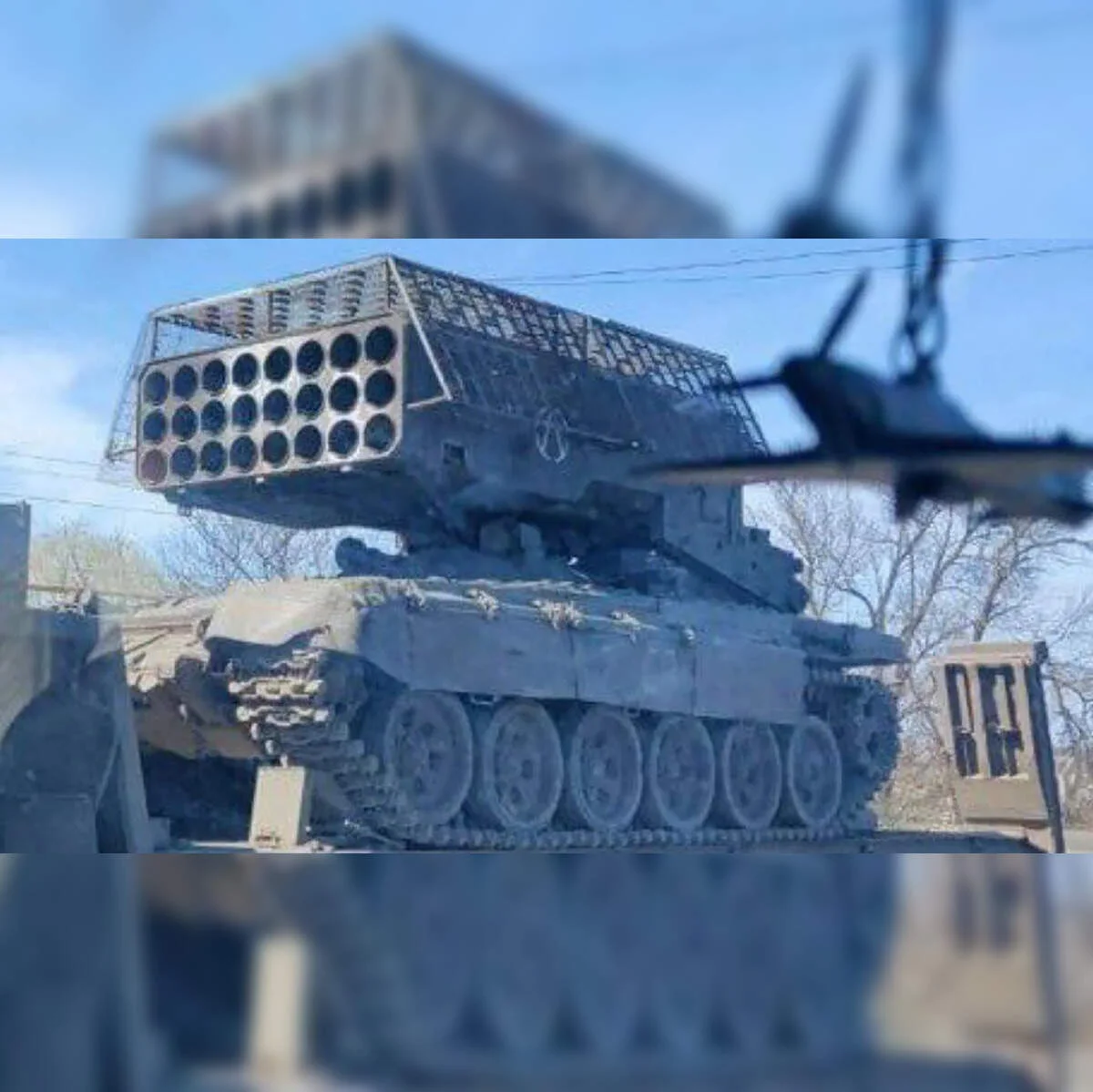
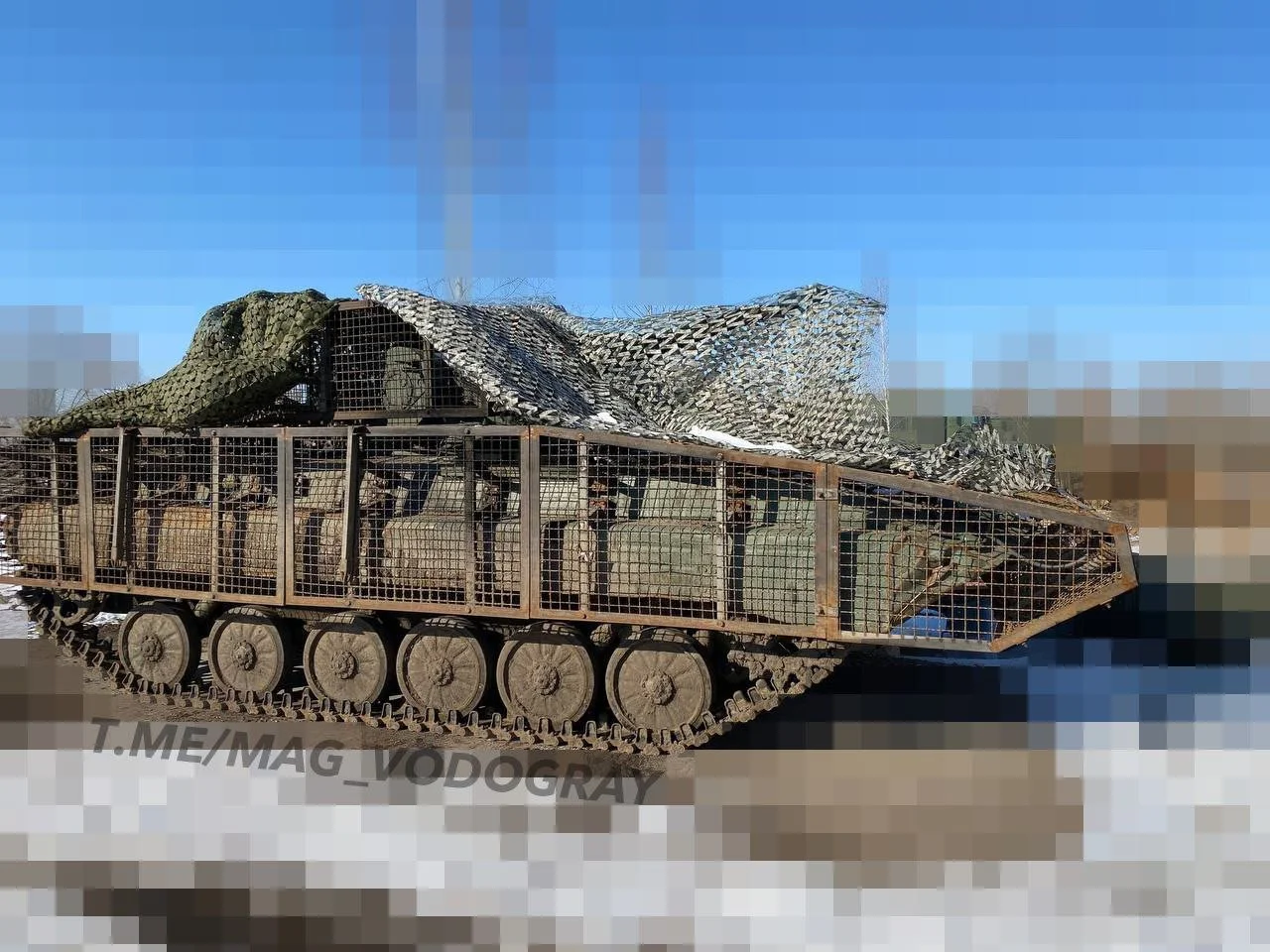
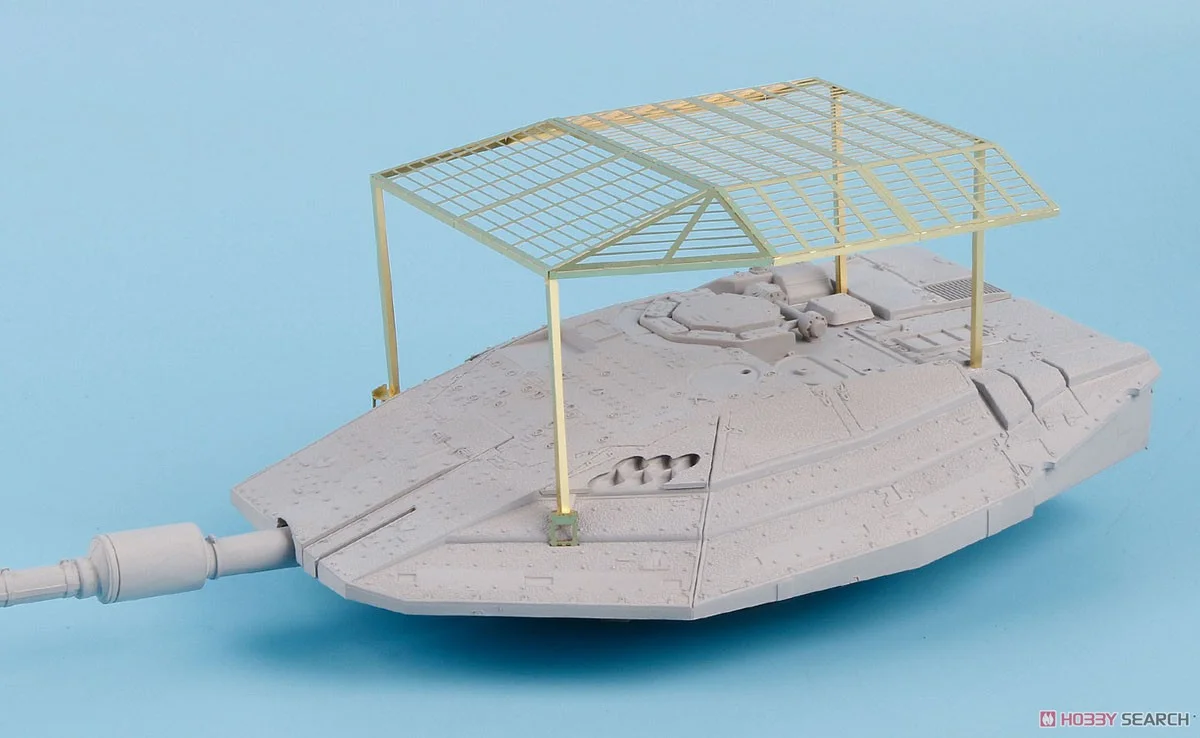
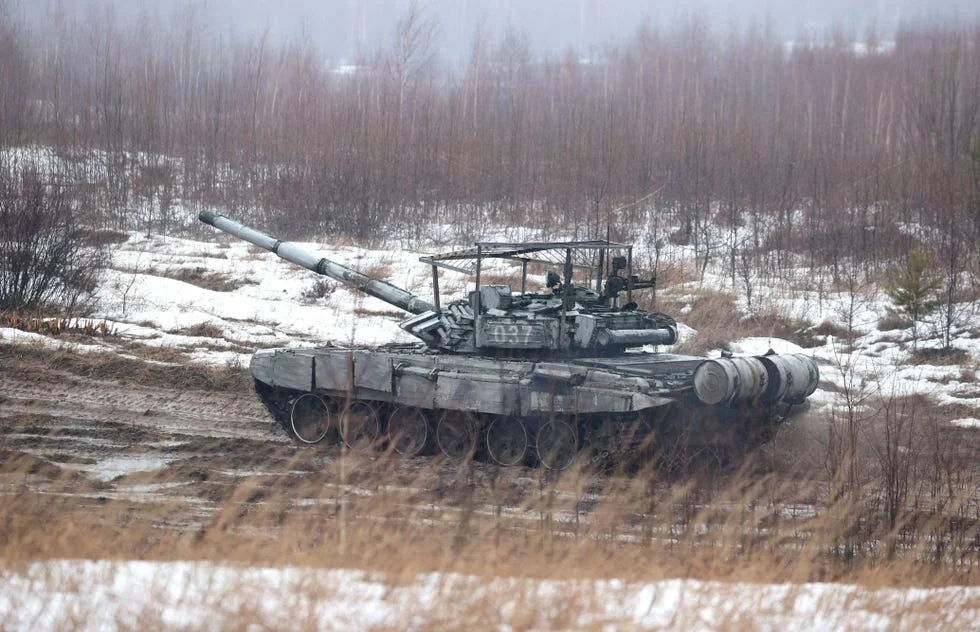
This armor steel thickness guide provides a comprehensive reference for defense buyers, military vehicle engineers, and armor fabrication specialists. Drawing on battlefield data from Ukraine and Middle Eastern theaters, along with material science principles and Dengtai's decade of experience in heavy steel defense fabrication, we cover recommended thickness ranges, the trade-offs between protection and weight, military standards, and practical calculation methods. Whether you are specifying materials for a T-72 cope cage, an M1 Abrams slat armor upgrade, or a light tactical vehicle bar armor system, this article answers every key question about steel thickness for anti-drone cage armor.
Recommended Steel Thickness for Anti-Drone Cage Armor
Understanding Armor Steel Thickness for Anti-Drone Cages
The recommended plate thickness for anti-drone cage armor varies by vehicle class and threat level, but battlefield data points to 8 mm as the most versatile baseline. This section breaks down the thickness recommendations for different scenarios and explains why 6 mm, 8 mm, and 10 mm have become the standard options for cope cage fabrication.
Minimum Steel Thickness to Stop FPV Drone Impacts
The most common question among defense buyers is: what is the minimum steel thickness to stop a FPV drone impact? Based on extensive battlefield analysis and armor steel testing, the effective threshold for anti-drone cage armor begins at 6 mm. A 6 mm armor steel plate — typically in AR400 or AR500 grade — can reliably stop most commercial FPV drones carrying RPG warheads or anti-personnel munitions when the standoff distance is maintained at 200–400 mm from the vehicle hull.
However, the minimum viable thickness depends on several factors:
- Warhead type: Shaped-charge RPGs require at least 8 mm to disrupt the jet effectively, whereas fragmentary drones may be stopped by 5 mm.
- Impact angle: Angled placement (30–45 degrees) increases effective thickness by 15–30% without adding weight.
- Steel grade: AR500 at 6 mm outperforms mild steel at 10 mm due to superior hardness and tensile strength.
- Standoff distance: Greater gap between cage and hull reduces the required plate thickness.
For light tactical vehicles where weight is a primary concern, 6 mm AR500 steel represents the practical minimum for anti-drone cage protection that still provides meaningful defense.
6 mm vs 8 mm vs 10 mm Steel — Which Is Best?
Selecting between 6 mm, 8 mm, and 10 mm steel plate is a constant trade-off in cope cage material selection. Here is how each thickness performs across key metrics:
| Thickness | Weight per m² | FPV Protection | RPG Protection | Mobility Impact | Best Application |
|---|---|---|---|---|---|
| 6 mm | ~47 kg | Good | Limited | Minimal | Light tactical vehicles, MRAPs |
| 8 mm | ~63 kg | Excellent | Good | Moderate | MBTs, heavy IFVs |
| 10 mm | ~79 kg | Superior | Excellent | Significant | Urban operations, static defenses |
For most main battle tank applications, 8 mm plate thickness provides the optimal balance. The T-72 cope cage and Leopard 2 anti-drone cage typically use 8 mm plate as the baseline, with 10 mm reinforcement around the turret roof and engine deck. For lighter vehicles such as the M113 or JLTV, 6 mm AR500 steel is preferred to avoid overloading the suspension while still defeating FPV drone threats.
Dengtai recommends the following thickness guidelines based on vehicle class and threat level:
- Class 1 — Light Tactical (HMMWV, JLTV): 6 mm AR500 for cage sides, 8 mm for roof panels
- Class 2 — Armored Personnel Carrier (M113, Stryker): 8 mm AR400/AR500 throughout
- Class 3 — Main Battle Tank (M1 Abrams, T-72, Leopard 2): 8–10 mm with localized 12 mm reinforcement
- Class 4 — Static Defense / Checkpoint: 10–12 mm, weight is not a primary concern
How Steel Thickness Affects Protection, Weight, and Mobility
Weight Implications of Different Armor Thicknesses
Steel weight scales linearly with thickness, and this relationship has profound consequences for vehicle performance. A square meter of 6 mm armor steel weighs approximately 47 kg; the same area in 10 mm plate weighs nearly 79 kg — a 68% increase. When you consider that a typical tank cope cage covers 8–14 m² of surface area, the weight difference between a 6 mm and 10 mm design can exceed 400 kg.
The weight implications of different armor thicknesses affect not only total vehicle mass but also center of gravity, suspension load, and fuel consumption. Key weight benchmarks for anti-drone cage armor steel thickness include:
- 6 mm AR500 steel: ~47 kg/m² — suitable for light tactical vehicles with limited payload
- 8 mm AR400 steel: ~63 kg/m² — the standard for main battle tanks
- 10 mm AR400 steel: ~79 kg/m² — used for high-threat urban environments
- 12 mm reinforcement plates: ~94 kg/m² — localized turret and engine deck protection
Does steel thickness significantly impact slat armor fabrication cost? Absolutely. Thicker plate requires heavier-duty CNC plasma cutting equipment, more weld passes, and longer fabrication time. Dengtai's armor steel welding and fabrication data shows that an 8 mm cope cage costs approximately 25–35% more to fabricate than a 6 mm equivalent, while a 10 mm design adds another 20–25% on top of that — driven primarily by welding time and consumable costs.
Does Thicker Anti-Drone Cage Steel Reduce Vehicle Mobility?
Yes, thicker anti-drone cage steel directly reduces vehicle mobility, and the effect is most pronounced on lighter platforms. An additional 400 kg on a 70-ton MBT represents a 0.6% weight increase — negligible in practice. But the same 400 kg on a 15-ton light tactical vehicle represents a 2.7% increase, which impacts acceleration, braking distance, and off-road performance.
Beyond raw weight, thicker steel shifts the vehicle's center of gravity upward. Cage armor is mounted on standoffs above the hull roof, and heavier plate at this elevated position increases rollover risk during sharp turns and off-camber terrain navigation. This is why slat armor steel selection for light vehicles often favors 6 mm AR500 over the heavier 8 mm or 10 mm options.
Vehicle commanders must assess their operational environment: a vehicle defending a fixed checkpoint can accept the weight penalty of 10 mm armor steel, whereas rapid-response units conducting patrols in urban terrain benefit from the mobility preserved by 6 mm armor steel thickness.
Military-Grade Steel Thickness Standards for Cope Cages
Steel Thickness Used on Tanks and Armored Vehicles
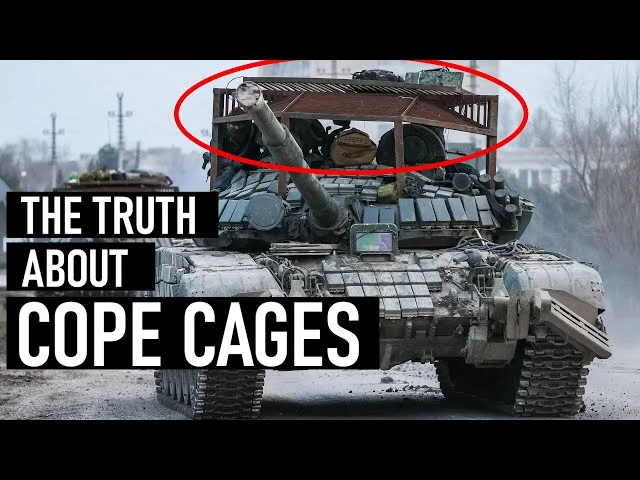
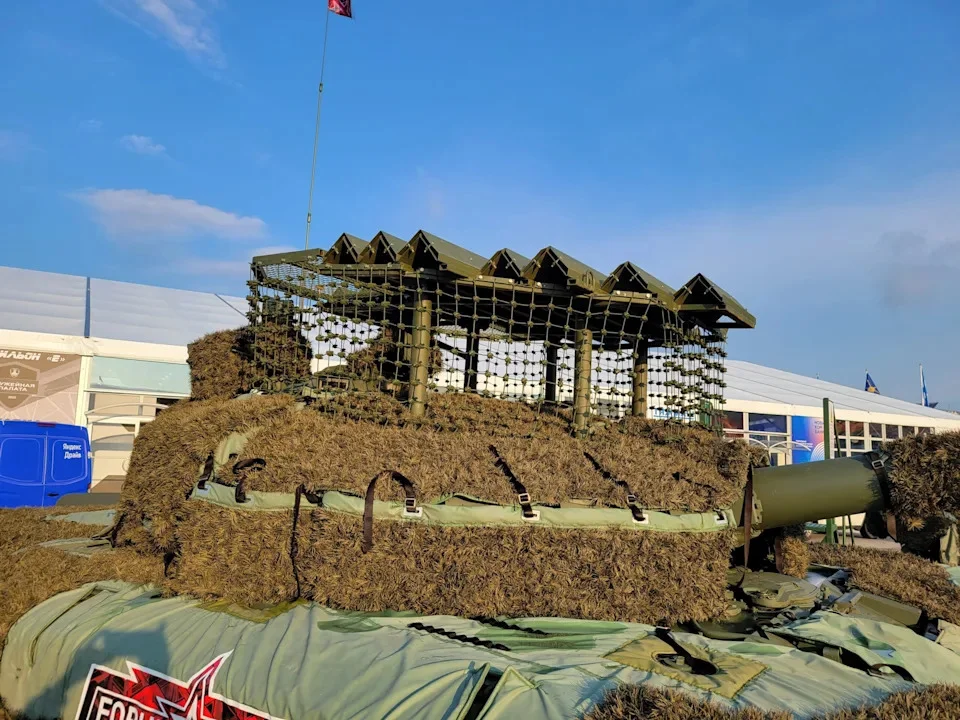
What steel thickness do military cope cages typically use? Battlefield analysis from the Russo-Ukrainian war provides a clear picture. The T-72 cope cage — one of the most widely documented examples — typically uses 8 mm armor steel plate for the main cage structure, with 10 mm reinforcement around the turret roof and 6 mm side skirts. M1 Abrams cope cages fabricated by battlefield workshops and OEM armor steel manufacturers alike follow similar specifications: 8 mm AR400 steel for the cage frame, and 10 mm AR500 for the elevated roof panels that face the highest threat angle from drone attacks.
For the Leopard 2 anti-drone cage, German engineering standards specify 8 mm Hardox 450 or equivalent armor steel, with critical fastening points reinforced to 12 mm. The optimal steel thickness for tank top armor cages typically falls in the 8–10 mm range, determined by the need to stop FPV drones carrying PG-7VL warheads (which can penetrate 500 mm of RHA — requiring the standoff cage to disrupt the shaped charge jet before it reaches the hull).
Key thickness specifications by vehicle platform:
- T-72 / T-90: 8 mm main cage, 10 mm turret roof, 6 mm engine deck screens
- M1 Abrams: 8 mm AR400 side panels, 10 mm AR500 roof, 12 mm mount brackets
- Leopard 2: 8 mm Hardox 450 throughout, 12 mm hardpoints
- BMP / Bradley: 6 mm primary structure, 8 mm front glacis panels
- MRAP / Cougar: 6 mm AR500 cage, 8 mm roof against top-attack threats
Steel Grades: AR400 vs AR500 vs Hardox for Anti-Drone Armor
Steel grade selection is equally important as thickness. AR400 vs AR500 steel for cope cages — which is better? AR400 (370–430 HBW) offers excellent weldability and formability, making it ideal for complex cage geometries. AR500 (470–530 HBW) provides superior hardness and abrasion resistance but is more challenging to weld and machine.
Hardox 450 and 500 (SSAB's proprietary grades) occupy a similar performance space to AR400 and AR500 respectively, with tighter thickness tolerances and more consistent through-hardness. Many cope cage material steel grade specifications now list Hardox as a preferred alternative to standard AR plate for anti-drone applications.
The cope cage material steel grade selection should follow these guidelines:
- AR400 / Hardox 450: Best for general cage structure where welding complexity is high and weight is a concern. Suitable for 6–8 mm thickness range.
- AR500 / Hardox 500: Best for high-impact zones (roof panels, front glacis) where maximum hardness is needed. Ideal for 8–10 mm thickness range.
- Mild steel (S235 / S355): Only suitable for non-structural fill panels or training cages. Not recommended for combat anti-drone applications.
- Stainless steel (304 / 316): Used occasionally for corrosion-resistant coastal deployments, but inferior ballistic performance per unit thickness compared to AR grades.
Dengtai recommends AR500 or Hardox 500 for primary armor steel welding and fabrication of anti-drone cages, with AR400 or Hardox 450 used for secondary structural members where weld complexity is greater.
How to Calculate Required Armor Thickness for Drone Protection
How to calculate required armor thickness for drone protection is a question that demands both engineering rigor and practical battlefield data. While there is no single formula that covers every threat scenario, the following method provides a reliable starting point for defense fabricators and vehicle engineers.
Step 1 — Identify the threat baseline. Determine the most likely warhead type. For FPV drones, the common threats are RPG-7 warheads (PG-7VL, PG-7VM) and modified anti-personnel munitions. The PG-7VL can penetrate approximately 500 mm of RHA — meaning the standoff cage must disrupt the shaped charge jet before it reaches the hull.
Step 2 — Calculate standoff distance. The cage must be mounted at a distance from the hull that exceeds the shaped charge's optimal standoff. A minimum of 200 mm is required for 6 mm plate, while 300–400 mm is recommended for 8 mm armor steel thickness. The formula is: Standoff (mm) = Warhead diameter × 3–5 for shaped charges.
Step 3 — Determine required plate thickness. Based on empirical testing against FPV drone threats:
- Against small fragmentary drones (<1 kg payload): 4–5 mm AR500 sufficient
- Against medium FPV with RPG warheads (2–3 kg): 6–8 mm AR500 required
- Against large industrial drones with heavy payloads (>5 kg): 8–10 mm minimum
- Against tandem-charge warheads: 10 mm + specialized cage geometry needed
Step 4 — Apply safety and angle factors. Multiply the base thickness by these correction values:
- Flat (0° angle): ×1.0 — use base thickness
- Angled at 30°: ×0.85 — reduced effective requirement
- Angled at 45°: ×0.70 — significantly reduced requirement
- Single-layer cage: ×1.0 — standard configuration
- Double-layer spaced cage: ×0.75 per layer — allows thinner individual plates
Step 5 — Validate with weld test. Before committing to full production, Dengtai recommends fabricating a test panel at the calculated thickness and subjecting it to armor plate inspection NDT (ultrasonic testing and magnetic particle inspection) to verify weld integrity and material soundness.
For defense buyers without in-house engineering teams, the simplest rule of thumb is: 8 mm AR500 at 300 mm standoff with 30° angling provides effective protection against the vast majority of FPV drone threats encountered on modern battlefields.
Can Thinner Steel with Hardening Replace Thicker Armor Plates?
Can thinner steel with hardening provide equivalent drone protection? This is one of the most debated questions in cope cage design. The short answer is: partially yes, but with important caveats.
Through-hardened armor steels like AR500 at 6 mm can indeed match or exceed the ballistic performance of mild steel at 10 mm. The Brinell hardness number (BHN) matters enormously — AR500 at 470–530 HBW offers roughly 3× the abrasion resistance of structural mild steel at 120–150 HBW. For fragmentary threats (shrapnel, ball bearings, casing fragments), thinner hardened steel performs exceptionally well.
However, for shaped-charge warheads — the primary threat from FPV drones — hardness alone is insufficient. Shaped charges form a superplastic copper jet that penetrates by extreme pressure, not abrasion. Against this threat, plate thickness and standoff distance are the dominant variables. A 4 mm AR500 plate will fail catastrophically against a PG-7VL warhead, whereas an 8 mm AR400 plate with proper standoff will disrupt the jet effectively.
Where thinner hardened steel excels:
- Fragmentary drone payloads: 4–5 mm AR500 is as effective as 8 mm mild steel
- Small quadcopter drops: 5 mm AR500 stops most grenade fragments reliably
- Weight-sensitive platforms: Replacing 8 mm AR400 with 6 mm AR500 saves ~16 kg/m²
Where thinner hardened steel falls short:
- Shaped-charge warheads: Hardness helps marginally; thickness is the primary factor
- Kinetic energy penetrators: Thickness dominates over hardness for rigid-body penetration
- Repeated impacts: Hardened steel is more brittle and may crack under multiple hits
Dengtai's engineering team recommends a hybrid approach: use 6 mm AR500 for primary cage panels where weight is a concern, reinforce with 8 mm AR400 at impact zones (corners, roof edges, mounting points), and never drop below 6 mm for any panel exposed to shaped-charge threats. This approach achieves the weight savings of thinner steel while maintaining the protection necessary for modern drone threats.
Steel Selection for Slat Armor and Bar Armor Fabrication
Mild Steel vs Stainless Steel vs Armor Steel for Cage Fabrication
Can mild steel be used for cope cage fabrication? Technically yes, but it is not recommended for combat applications. Mild steel (S235JR, S355J2) at 10–12 mm provides adequate structural strength for training cages, static displays, or low-threat environments. However, against FPV drone attacks, mild steel fails through ductile perforation rather than shattering the warhead — meaning the shaped charge penetrates the bar and still reaches the vehicle hull with significant residual energy.
Can stainless steel be used for slat armor fabrication? Stainless steel grades 304 and 316 are occasionally specified for naval or coastal defense applications where corrosion resistance is the primary concern. However, stainless steel has approximately 15–20% lower yield strength than equivalent AR grades, meaning you would need to increase thickness by 15–20% to match the ballistic performance of AR400. For most land-based military applications, armor steel manufacturers recommend AR400 or AR500 over stainless steel due to the superior strength-to-weight ratio.
How does steel selection affect slat armor total weight? The density of steel is relatively consistent across grades (~7,850 kg/m³), so weight differences between grades at the same thickness are negligible. The real weight difference comes from the required thickness: if mild steel needs 12 mm to match 8 mm AR400's performance, the mild steel option is 50% heavier for the same protection level.
Recommended steel selection by application:
- Combat anti-drone cages: AR400 / AR500 / Hardox 450–500 — 6–10 mm thickness
- Training / display cages: Mild steel S355 — 10–12 mm thickness
- Naval / coastal slat armor: Stainless steel 316L — 8–12 mm thickness
- Bar armor for light vehicles: AR400 round bar — 20–30 mm diameter
Welding and Fabrication Considerations for Armor Steel
Armor steel welding and fabrication requires specialized procedures that differ significantly from structural steel welding. The key challenges when working with AR400 and AR500 include heat-affected zone (HAZ) softening, hydrogen-induced cracking, and distortion control.
What filler metal is recommended for armor steel cope cages? For AR400, Dengtai recommends ER110S-G or AWS A5.28 ER90S-G filler metal with a preheat of 150–200°C. For AR500, use ER120S-G filler with preheat maintained at 200–250°C and interpass temperature not exceeding 300°C. Post-weld cooling should be controlled — never quench armor steel welds in water or allow rapid cooling on a cold floor.
How to achieve proper weld fusion on hardened armor steel? The critical technique is controlled heat input: too little heat produces incomplete fusion at the weld root; too much heat softens the HAZ and reduces ballistic performance. The target heat input range for armor plate welding services is 1.0–1.5 kJ/mm for AR400 and 0.8–1.2 kJ/mm for AR500.
How does steel thickness affect cope cage protection effectiveness? Thicker steel improves protection but introduces welding challenges. At 10 mm and above, multi-pass welding is required, increasing fabrication time and cost. Armor plate inspection NDT (ultrasonic testing and magnetic particle inspection) is mandatory for all load-bearing welds on combat cage armor to verify fusion and detect subsurface cracks.
Dengtai's heavy steel defense fabrication facility in China is equipped with robotic CNC plasma cutting tables capable of handling plate up to 25 mm thick, certified welding procedures for all AR and Hardox grades, and full NDT capabilities including ultrasonic testing, X-ray, and magnetic particle inspection.
Conclusion
Selecting the right armor steel thickness for an anti-drone cage armor system is a decision that directly impacts vehicle survivability, mobility, and mission effectiveness. This guide has covered the key considerations: the minimum 6 mm threshold for FPV protection, the recommended 8 mm standard for main battle tanks, the weight and mobility trade-offs at each thickness, military-grade specifications for platforms like the T-72, M1 Abrams, and Leopard 2, and practical calculation methods for determining your specific requirements.
The most important takeaway is that armor steel thickness cannot be selected in isolation. It must be paired with the correct steel grade — AR400, AR500, or Hardox — and fabricated using certified armor steel welding and fabrication procedures to ensure weld integrity and ballistic performance. Steel selection for slat armor and cope cages depends on threat level, vehicle class, and operational environment.
For defense buyers preparing to source anti-drone cage armor, Dengtai offers complete engineering support: from initial thickness calculation and cope cage material steel grade selection through fabrication, welding, NDT inspection, and delivery. Our heavy steel defense fabrication facility meets MIL-STD and NATO quality standards, and our engineering team can help you optimize the plate specification for your specific vehicle platform and threat environment.
Contact Dengtai today to discuss your anti-drone cage armor requirements. Our team will provide a detailed material specification including recommended steel thickness, grade, standoff distance, and fabrication timeline tailored to your platform.